
Why is my water pressure regulator leaking in Spring Branch West
A leaking water pressure regulator in Spring Branch West usually means a failed diaphragm, a worn O-ring, or debris stuck in the valve seat. Here is how to diagnose and fix it fast.
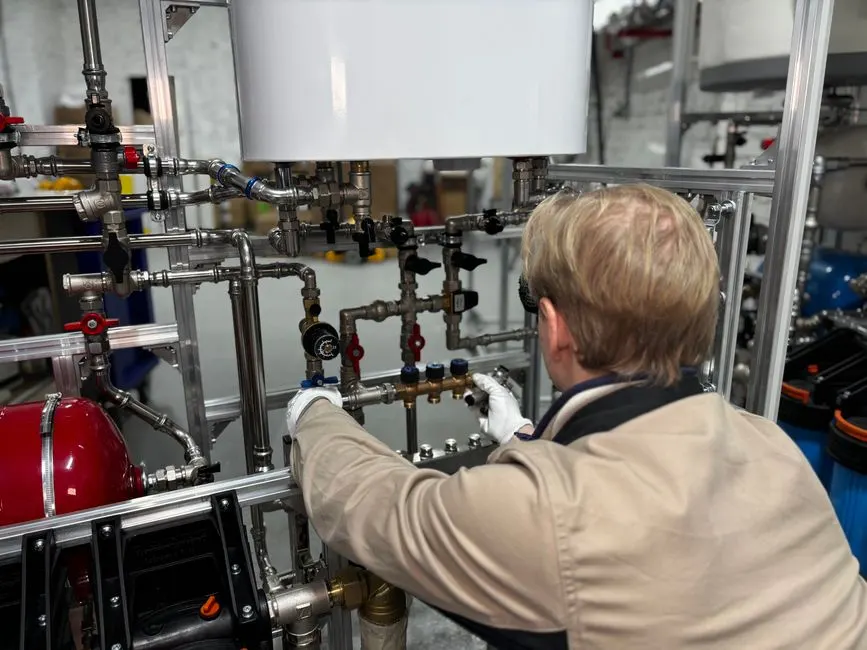
Your water pressure regulator is leaking because the internal diaphragm has ruptured, an O-ring seal has worn out, or debris from Houston's hard water has scored the valve seat. In Spring Branch West, where many homes were built between 1960 and 1990, the original regulators are now 30 to 60 years old and well past their service life. We see this exact failure weekly. The rest of this post explains how to confirm the cause, stop the leak, and decide whether to repair or replace the unit.
If you need Plumbing Houston TX for a regulator that will not stop dripping, our team handles that. But first, let's walk through what is happening under your hood.
What a Water Pressure Regulator Does and Why It Fails
A water pressure regulator is a bell-shaped brass valve that reduces incoming city water pressure to a safe 50-60 PSI for your home. Houston's municipal supply often runs 80-120 PSI, which is high enough to burst supply lines, damage water heaters, and shorten the life of every faucet and appliance. The regulator sits right after your main shutoff valve, usually near the front hose bib or inside a basement crawlspace.
Inside the regulator, a rubber diaphragm separates a spring chamber from the water chamber. When you open a tap, the diaphragm flexes to adjust flow and maintain steady pressure. Over time, that diaphragm hardens, cracks, or tears. Once it fails, water pushes past the seal and drips from the bell housing or the adjustment screw on top. That is the leak you are seeing.
Spring Branch West has an added problem: our water is hard, averaging 8-12 grains per gallon. That mineral content leaves calcium deposits inside the valve, which abrade the diaphragm and the O-ring that seals the bonnet. A regulator that would last 15 years in a softer-water city often gives out in 8-10 years here.
The Most Common Causes of a Leaking Water Regulator in Spring Branch West TX
When we open a leaking regulator in Spring Branch West, we find one of five problems. The fix and the cost depend on which one you have.
- Ruptured diaphragm. The most frequent cause. The rubber disc tears after years of flexing against high pressure. Water weeps from the bell or the top screw. Replacement is the only reliable fix.
- Worn O-ring or bonnet seal. The seal between the upper and lower body flattens and cracks. You will see water around the seam where the two halves meet. A $5 O-ring often solves it-if the valve body is otherwise sound.
- Debris in the valve seat. Sand, rust, or scale from the city main gets trapped under the seat. The regulator cannot close fully, so it drips continuously and pressure creeps up overnight. Flushing the valve sometimes clears it.
- Failed internal spring. Less common but possible. The spring loses tension, so the regulator no longer holds steady pressure. You will notice pressure spikes when other fixtures run.
- Frozen or cracked body. A hard freeze-like the ones we get in Houston every few winters-can split the brass housing. That leak is obvious and requires full replacement.
If you are seeing a water pressure regulator repair Houston TX issue that involves more than a simple O-ring, we usually recommend replacing the whole unit. A new regulator costs $80-$200 in parts, and labor runs $150-$350 depending on access.
How to Tell If Your Water Pressure Regulator Is Failing
Signs of water pressure regulator failure in Spring Branch West show up before the leak starts. Catch them early and you avoid a flooded flowerbed or a burst pipe inside the wall.
- Pressure gauge reads above 75 PSI. Screw a $15 test gauge onto a hose bib. If it reads over 75 with no fixtures running, the regulator is not doing its job.
- Water hammer or banging pipes. When you shut off a faucet, you hear a loud thud. That is the regulator failing to absorb the pressure surge.
- Dripping from the bell housing. Even a slow drip-one drop every 10 seconds-means the diaphragm is compromised. That drip adds up to 5 gallons per day.
- Fluctuating pressure in the shower. If someone flushes a toilet and your shower scalds you, the regulator is sticking.
- Visible corrosion or green crust. That is a sign the brass body is pitted and near the end of its life.
We see these symptoms all over the neighborhood, especially in the older ranch homes near Plumbing in Spring Branch West where original 1970s regulators are still in service. If your home is more than 15 years old and you have never replaced the regulator, it is on borrowed time.
Can You Fix a Leaking Water Pressure Regulator Yourself?
You can replace a water pressure regulator yourself if you are comfortable with basic plumbing and have a few tools. The job takes 1-2 hours for a first-timer. Here is the process we use:
- Shut off the main water valve and open a hose bib to drain the line.
- Loosen the union nuts on both sides of the regulator with two wrenches. Expect some water spillage.
- Remove the old regulator and clean the pipe threads.
- Wrap new threads with Teflon tape and install the new regulator, matching the arrow to the direction of water flow.
- Tighten the unions, turn the water back on, and check for drips.
- Adjust the top screw until your gauge reads 50-60 PSI.
That said, most homeowners in Spring Branch West call us after they strip a union nut or cross-thread the new valve. The brass is soft, and the pipes in older homes are often brittle. If you are not sure, it is cheaper to have us do it right the first time.
What to Watch Out For
Three mistakes turn a $200 repair into a $2,000 water damage claim. Avoid them.
- Ignoring the leak because it is small. A regulator that drips one drop per second wastes 8.6 gallons per day-over 3,000 gallons a year. That water pools around your foundation, which in Houston's clay soil can cause shifting and cracks.
- Replacing only the O-ring on a 20-year-old valve. If the diaphragm is also stiff, the leak comes back in a month. Replace the whole unit when it is past its service life.
- Setting pressure too high. Some homeowners crank the adjustment screw to get stronger showers. Anything above 65 PSI stresses your supply lines and voids most water heater warranties. Keep it at 50-60 PSI.
We also caution against using a generic big-box regulator on a home with 1-inch main lines. The flow capacity does not match, and you will get pressure drop when two fixtures run at once. Match the valve to your pipe size.
When to Call a Professional
Call a professional if you see water spraying from the regulator, if the leak is inside a wall or crawlspace, or if you have already replaced the O-ring and the drip persists. Those point to a failed diaphragm or a cracked body-both require full replacement with a correctly sized valve.
We also get called when the regulator is stuck and pressure spikes above 100 PSI. That can burst a washing machine hose in minutes. If your gauge reads over 100, shut off the main and call us.
Our team handles water pressure regulator repair in Spring Branch West daily. We carry the common sizes on our trucks-3/4-inch and 1-inch-so most jobs are done in a single visit. We find the leak, fix it, and test the line before we leave. You get upfront pricing before we start, and we clean up the work area.
Frequently Asked Questions
Why is my water pressure regulator leaking in Spring Branch West?
The most common cause is a ruptured diaphragm, followed by a worn O-ring or debris in the valve seat. In Spring Branch West, hard water and older homes (many built 1960-1990) accelerate wear. If your regulator is over 10 years old, replacement is usually the right call.
How do I stop a water pressure regulator from leaking in Houston TX?
First, shut off the main water valve. If the leak is at the bonnet seam, a new O-ring may stop it. If water comes from the bell or top screw, the diaphragm has failed and you need a new regulator. We can replace it same-day for $150-$350 in labor plus parts.
Should I replace a leaking water pressure regulator in Spring Branch West?
Yes, if the unit is more than 10 years old or if the leak is from the diaphragm. A rebuild kit costs $20-$40 but only fixes seal leaks. A new regulator runs $80-$200 and lasts 10-15 years in our water. Replacement is the better value.
What causes water pressure regulator leaks in Houston Texas?
Houston's hard water leaves scale that tears diaphragms and O-rings. High city pressure (80-120 PSI) stresses the internal spring. And our occasional freezes can crack the brass body. All three are common in Spring Branch West's older housing stock.
How much does water pressure regulator repair cost in Spring Branch West?
Typical 2026 pricing: $150-$350 for labor, plus $80-$200 for the regulator itself. A simple O-ring replacement might be $100-$150. Emergency calls after hours add $75-$150. We quote the full price before we start.
Get Help with Plumbing in Houston
A leaking water pressure regulator will not fix itself, and the damage to your foundation and pipes adds up fast. Call Houston Plumbing at +1 (281) 306-5744 for same-day service in Spring Branch West and across Houston. We will diagnose the leak, replace the valve if needed, and restore steady pressure to your home.